New Synth Project

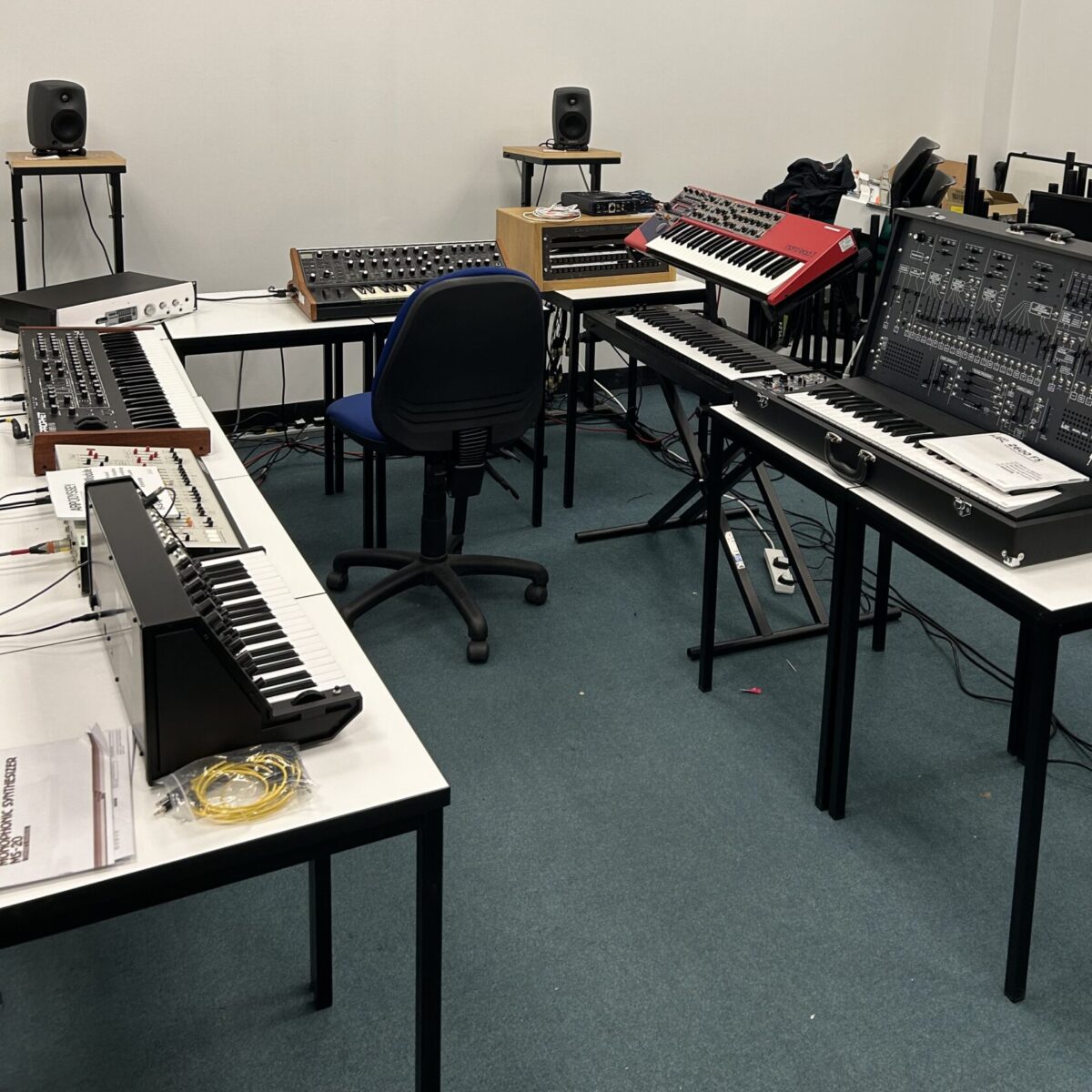
July – September 2026: I’m at work in the Music and Media Synth Lab at the University of Surrey on a new project for synths and surround sound recordings. As I work more with synthesisers I realise the approach that suits me best is a very instinctive one in which I select basic sounds on the basis of what they draw from me in terms of improvisation. I have tried more systematic cataloguing but this just tends to become a rather numbing, uninspiring process and I am always drawn back to improvising and trusting my ear.

July – September 2026: I’m at work in the Music and Media Synth Lab at the University of Surrey on a new project for synths and surround sound recordings. As I work more with synthesisers I realise the approach that suits me best is a very instinctive one in which I select basic sounds on the basis of what they draw from me in terms of improvisation. I have tried more systematic cataloguing but this just tends to become a rather numbing, uninspiring process and I am always drawn back to improvising and trusting my ear.

The project is in its very early stages and I have little idea of what it is going to sound like or what form it will take aside from a sense that I want it to be fairly substantial – about 45 minutes, i.e. one half of a concert. What is more certain are the collaborators I am working with, or will be once my synth experiments are advanced enough: festival director and early music champion Matteo Gemolo – an artist in residence at Surrey for 26-27 supported by the Institute of Advanced Studies – and Tom Hall – composer, musicologist and long-term Surrey colleague who is an expert on, amongst other things, surround sound production and aesthetics.

I first encountered Matteo at the Royal Musical Association annual conference at Goldsmiths in 2020 where he was talking about his work with extended techniques on the baroque flute as realised by his ensemble at the time, Europa Ritrovata. A couple of years later we began conversations over a possible collaboration, initially involving the performance of my JPR. We applied to the IAS at Surrey with a rather ambitious project that was turned down but as my interests in synths developed I saw a pathway for bringing Matteo to Surrey on his own to work on a new piece together. Since 2020 Matteo’s career has expanded and evolved; he has recently decided to concentrate his energies not on performing/recording but on festival direction – he currently directs the Coudenberg Sound Box Fest in Brussels. Matteo’s career reorientation explains why he will be present in acousmatic form only in our piece.

Matteo’s background in eighteenth century flute performance and his commitment to early music provides one more firm aspect of this otherwise very open project – the music recorded by Matteo will be from eighteenth century (and earlier) treatises on playing the flute. We are hoping that these historical documents will furnish us with spoken word materials as well as music, perhaps touching on aesthetic ideas and debates of their time and very likely transformed through technologies of our time using various forms of processing. I imagine music from these treatises (which can contain entire pieces, not simply examples) being superimposed on each other as they constantly move around the space. The synthesiser parts (played live by me) will very likely be improvised, accompanying (although that is probably too neutral a word) the recordings. I am hoping that the process of selecting the recordings to use and how to combine them will involve all three members of the project team; one aspect of my compositional practice that has developed markedly over the years is my ability to harness the potential of collaboration – I think this is going to be needed if the most is to be made of the rich musical resources at our disposal.
Divertissements meets Bitches Brew

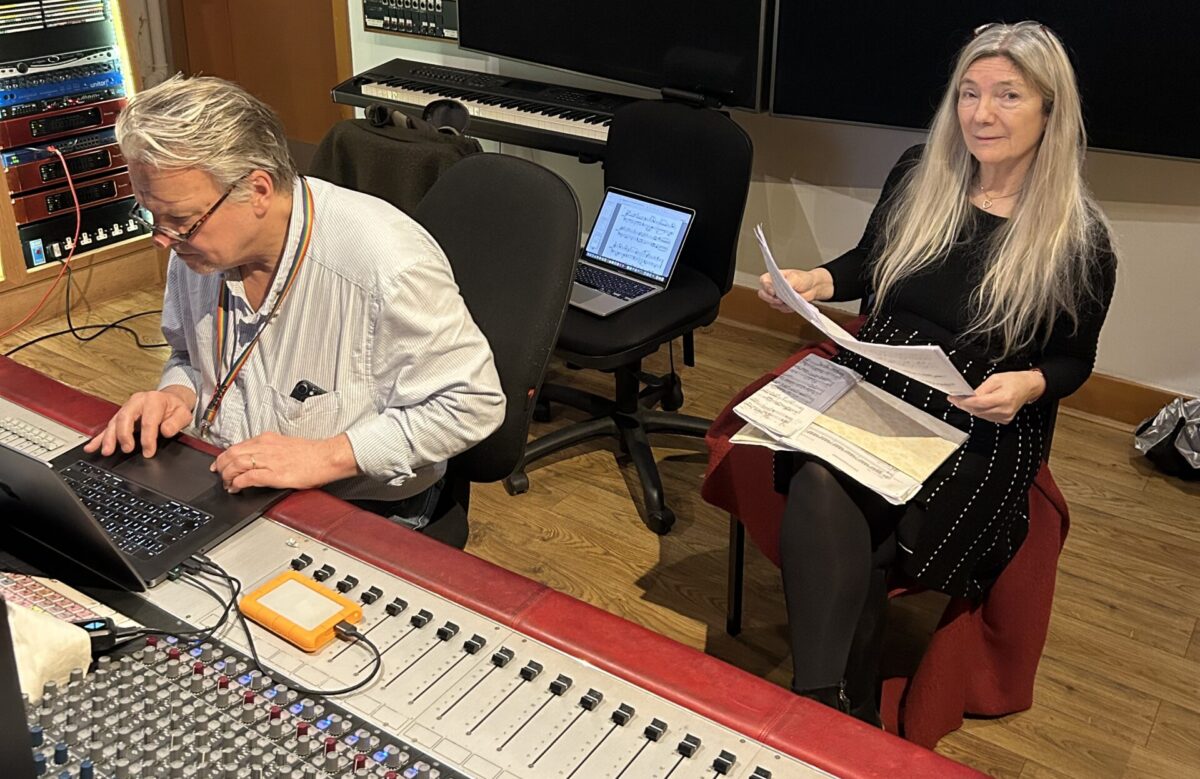
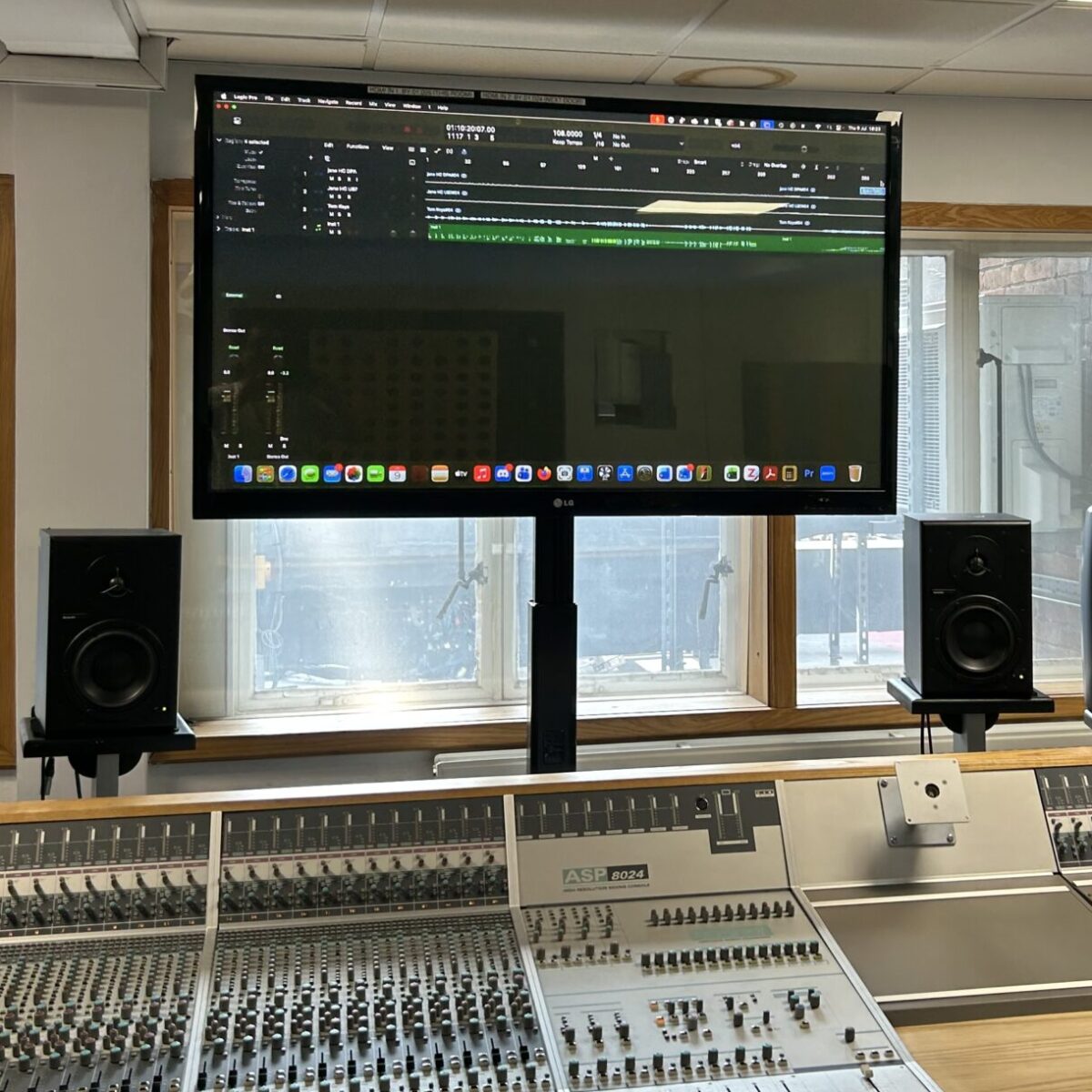
July 2026: back to the University of West London to work with Jane Chapman and Simon Zagorski-Thomas on our Divertissements project. This was a really satisfying session because it rekindled momentum and resulted in some genuinely collaborative composition; we listened through to the various improvisations Jane and I have created on the piece’s materials, deciding which had potential and which we needed to discard.

July 2026: back to the University of West London to work with Jane Chapman and Simon Zagorski-Thomas on our Divertissements project. This was a really satisfying session because it rekindled momentum and resulted in some genuinely collaborative composition; we listened through to the various improvisations Jane and I have created on the piece’s materials, deciding which had potential and which we needed to discard.

What happens next involves quite a number of bits of ‘homework’ for each of us but chief amongst these is that Simon is now in a position akin to producer Teo Macero who worked on Miles Davis’ seminal electric albums In a Silent Way and Bitches Brew. Macero and Davis selected and edited together multiple takes and improvisations in order to create the large scale forms featured on the albums; Simon now has to do the same with the improvisations he, Jane and I have selected. This is just the kind of collaborative process, with the roles of composer, performer and producer collapsing, that I hoped for on starting this project.

The next stage is to take the MIDI data that records my synth improvisations and use this to trigger instruments within the Townshend Studio collection; Simon and I are particularly drawn to the Synclavier with its range of early sampled sounds so we will begin there and see where it leads us.

There is still more to do before we can arrive at a master that we can approach labels to release but that will be for another news item.

The Gramophone Played (in New York)

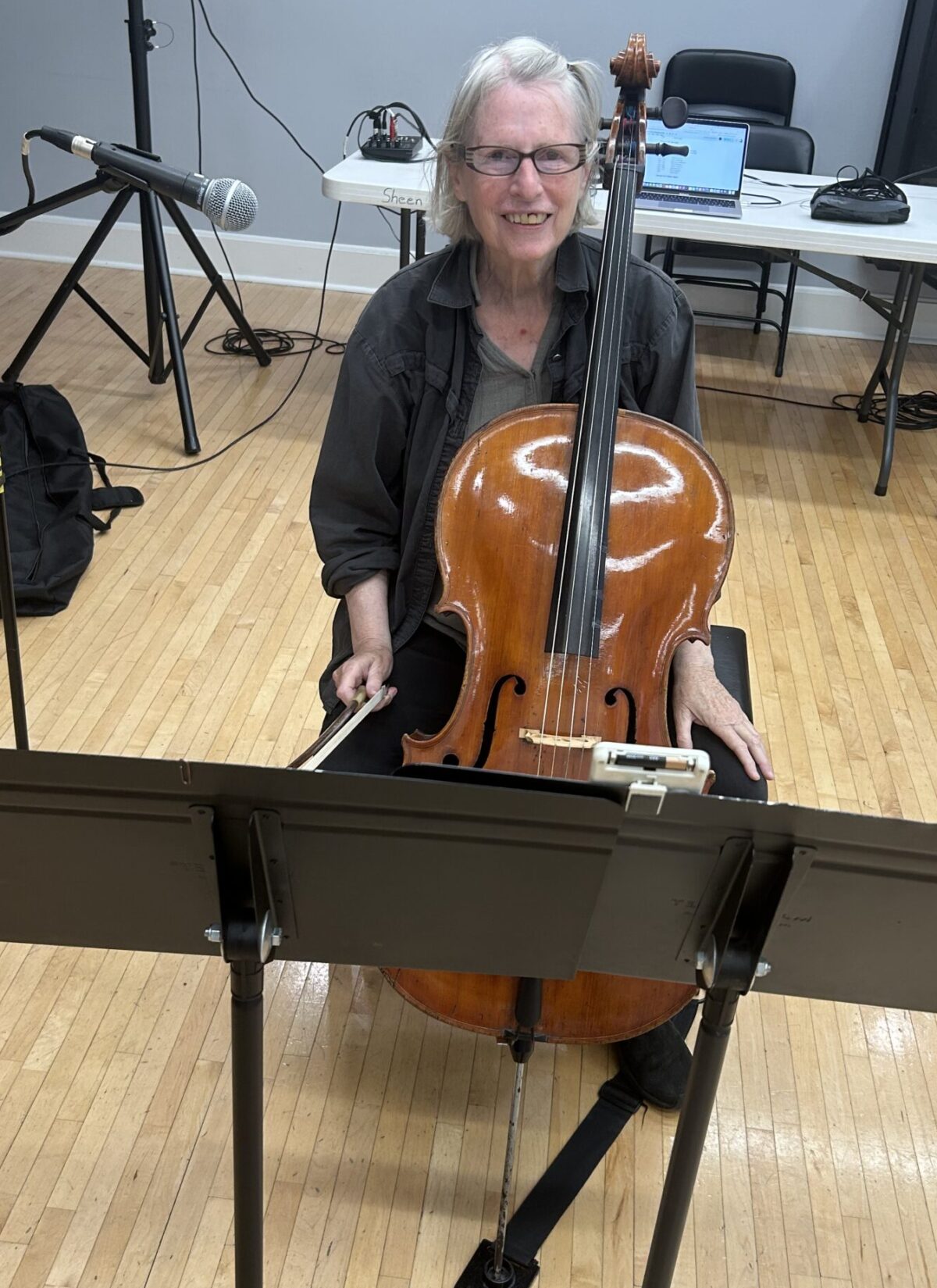
June 2026: the long-awaited live premiere of The Gramophone Played took place during the New York City Electroacoustic Music Festival (NYCEMF) on 22 June performed by its co-composer, the cellist Madeleine Shapiro. This was a new version of the work including an epilogue that draws on texts from the WWI Armistice and Treaty of Versailles documents.

June 2026: the long-awaited live premiere of The Gramophone Played took place during the New York City Electroacoustic Music Festival (NYCEMF) on 22 June performed by its co-composer, the cellist Madeleine Shapiro. This was a new version of the work including an epilogue that draws on texts from the WWI Armistice and Treaty of Versailles documents.

The Gramophone Played has a very involved history intertwined with mine and Madeleine’s artistic relationship that goes back to 2012 when we first met at the INTIME conference at the University of Coventry. Even by 21st century standards of communication, our relationship is unusual in the extent to which it has been nurtured within the online world; before this year’s premiere Madeleine and I had only met in person on that single occasion in Coventry some 14 years ago!

The Gramophone Played itself began life around 2018/19 and was performed in its original, shorter, version in 2021 as part of the online iteration of NYCEMF; 2020-2021 were, of course, the Covid-19 pandemic years so the festival was unable to convene physically. I have written here about how the technologically mediated nature of The Gramophone Played and the context of the pandemic influenced the outcome of the piece; essentially the pandemic pulled us away from making a piece for live performance and towards creating a piece of acousmatic music (music to be heard through speakers/headphones). Madeleine and I, in effect, became ‘bedroom’ electronic composers leading to a microscopic focus on sound and an elaborate editing process for the (now recorded) cello part.

I also wrote, in the same article, about how the electronic fixed media part of The Gramophone Played came to function as a kind of aural score for Madeleine. This was evident in various revisits that she made to the piece after the 2021 premiere; the improvised musical language of Madeleine’s cello part remained the same but there were subtle changes to its pacing and shaping through the piece. A similar approach was evident in the epilogue that occupied us, on and off, from around 2023 to the first half of 2026. Despite its short length (roughly four minutes) this part of The Gramophone Played cost us considerable effort; we needed to find a change in sound world without moving the piece in a completely different direction and, as an improviser, Madeleine needed to respond to a quite different, denser, kind of electronic backing.

The fourteen year gap between our two face-to-face meetings is a not inconsiderable length of time and, as artists, our careers have traversed many phases, the inevitable ups and downs we all experience as well as changes in our ambitions, aesthetic values, and so on. I am very proud of the tenacity we have both shown to keep plugging away at the Gramophone Played; the piece is short in duration but its modest span belies the huge amount of collaboration (both musical and emotional) that has produced it. Hearing and seeing Madeleine finally perform the piece as we always intended, but with both of us in very different career and life positions to when we first discussed working together, was very moving. I am determined this won’t be the last time The Gramophone Played is heard live but it is preserved in perpetuity here in any case.

Divertissements – Mixing and More

February – March 2026: two great studio sessions with Simon Zagorski-Thomas and Jane Chapman at Vestry Hall (University of West London) on our studio version of Divertissements now in its umpteenth version for harpsichord (as always) with vintage synthesisers (this incarnation). But there is a third instrument involved on this occasion – the recording studio itself.

February – March 2026: two great studio sessions with Simon Zagorski-Thomas and Jane Chapman at Vestry Hall (University of West London) on our studio version of Divertissements now in its umpteenth version for harpsichord (as always) with vintage synthesisers (this incarnation). But there is a third instrument involved on this occasion – the recording studio itself.

For us, ‘studio version’ implies music that could not be replicated live because studio technology is so ingrained in the sound. These two sessions involved a lot more than simply mixing if that is taken to mean working on the way the sonic elements sit together: fundamental changes were wrought on the way the harpsichord sounds, a multitude of ‘ear candies’ were added to promote sonic depth and enhance the flow from section to section, reverbs were tweaked, and a lot of attention was lavished on the way the many formal ‘panels’ in the piece are connected together. The result has arrived at something that is a very close match to what I imagined when this collaboration started; I find this the most convincing version of Divertissements so far (!) – the sonic textures that Simon has elaborated around the basic harpsichord/synth core have produced a richness and sense of whimsy that the earlier versions have always lacked.

Where Jane, Simon and I go now with this is to prepare a 45-minute album, probably for release on Bandcamp, featuring connected tracks that either issue from or culminate in the studio version. These tracks comprise electronic studies by Simon on selected samples from the piece, improvised duos by Jane and I that expand and ruminate on various Divertissements materials, and a recording of a live improvisation involving all three of us recorded at the London College of Music Composition Festival at UWL in June 2025.

Performance Research Special Issue

December 2025: On Music – a special issue of the journal Performance Research edited by myself and my University of Surrey colleagues Georgia Volioti and Chris Wiley – has been published online by Taylor and Francis. It contains two contributions from me: an article with Madeleine Shapiro about our piece The Gramophone Played, and my own contribution to the editorial entitled ‘Pirouetting on the Twists and Turns of Music Performance Studies’.

December 2025: On Music – a special issue of the journal Performance Research edited by myself and my University of Surrey colleagues Georgia Volioti and Chris Wiley – has been published online by Taylor and Francis. It contains two contributions from me: an article with Madeleine Shapiro about our piece The Gramophone Played, and my own contribution to the editorial entitled ‘Pirouetting on the Twists and Turns of Music Performance Studies’.

As with all collections of academic articles On Music took a lot of time and work to assemble, from making a final selection out of the many excellent submissions we received, to writing my own article with Madeleine, to the exhaustive (but rewarding) editing and proofing stages. All the editors are very proud of On Music; it charts the way in which the study of the act of musical performance has expanded in the last ten years into a huge range of areas – technological, ecological, educational, sociological – that stand alongside the more well known concerns of the discipline such as interpretation and collaboration.

In order to get to grips with what On Music deals with the editorial is the best place to start. Mine and Madeleine’s article deals with how our relationship and our music has been mediated by technology. Georgia’s and Chris’ articles help show the range of concerns addressed in the collection. Composers will also be interested in the articles by: Murphy McCaleb, Tanja Orning, Colin Frank and Jonathan Packham.

Divertissements (again) in Amsterdam

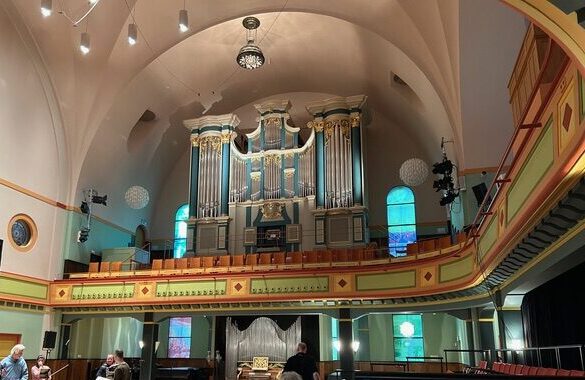
November 2025: yet another version of Divertissements received its world premiere at the Orgelpark, Amsterdam, courtesy of Prix Annelie de Man 2025 and the ensemble Black Pencil. The piece’s champion, harpsichordist Jane Chapman, teamed up with percussionist and composer Enric Montfort augmented with a ‘tape’ part utilising vintage synthesisers from the Townshend Studio at the University of West London.

November 2025: yet another version of Divertissements received its world premiere at the Orgelpark, Amsterdam, courtesy of Prix Annelie de Man 2025 and the ensemble Black Pencil. The piece’s champion, harpsichordist Jane Chapman, teamed up with percussionist and composer Enric Montfort augmented with a ‘tape’ part utilising vintage synthesisers from the Townshend Studio at the University of West London.

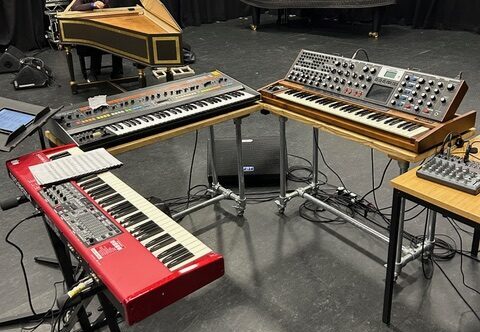
This version (the number of which I have lost count of at the time of writing!) is essentially a more ‘formalised’ approach to the kind of improvisation with that characterised the improvised version Jane and I performed at the LCM Composition Festival in June. This time there is a score but it is largely schematic, with brief verbal instructions/guides for the percussionist and fragmented stimuli for the harpsichordist to improvise with. The tape part uses the trusty Jupiter 8 and Moog Voyager alongside the Sequential Circuits Prophet 10 and the Yamaha DX1 – a more expensive cousin of the widely-used DX7. I made recordings of improvisations on these instruments and then either used these directly or after various kinds of digital manipulation in Logic Pro 11.

Jane’s and Enric’s performance was very good indeed. Jane and I had minimal communication with Enric prior to the performance but he had absorbed the score and the soundworld of the piece astutely and he and Jane improvised with great awareness of each other and the ‘tape’ part, sometimes dialoguing, sometimes going their own way. The result produced an instance of Divertissements that I could never have notated but, more importantly, had an energy characterised by the tension that a spontaneously created performance can bring.

Divertissements at LCM Composition Festival

June 2025: Jane Chapmen, Simon Zagorski-Thomas and I played at the LCM Composition Festival at the University of West London with the world premiere of two new versions of Divertissements and spin-off electronic studies (with video) by Simon.

June 2025: Jane Chapman, Simon Zagorski-Thomas and I played at the LCM Composition Festival at the University of West London with the world premiere of two new versions of Divertissements and spin-off electronic studies (with video) by Simon.

These versions have arrived mid-way through a project to create a studio version of Divertissements, i.e. one that uses the studio as an instrument with which to sculpt a unique iteration of the piece that is not constrained by the practicalities of live performance. What this means is an enhanced role for Simon as a producer, akin to how this role might play out on a pop recording. Simon is an equal creative partner alongside Jane and I, bringing his research into ‘hyper-production‘ to bear on our piece. A crucial component of the studio version are the vintage synthesisers of the Townshend Studio collection at UWL, in particular the Roland Jupiter 8. The synth material comes from a much older piece of mine, Blag, written for Icebreaker during 1992-4.

The versions performed in June took the original harpsichord and synthesiser materials as starting points with live FX performed by Simon. We first played using the synthesiser parts on ‘tape’ with me adding an additional live layer on the Jupiter, Moog Voyager and a Nord Electro 4. This version inevitably ended up being sonically rather ‘crowded’; an experiment that did not prove entirely successful. On the other hand, our second performance was an improvised account of the score; Jane played through all the materials, improvising with them (as opposed to ‘on’ them), whilst I responded with a range of freely improvised synthesiser materials conjured from my intuitive responses to different patch settings. This version was far more successful with space for genuine dialogue between Jane and I whilst Simon had room to insert FX, enhancing and enlivening the overall sound picture.

A link to this second improvised version can be found on Jane Chapman’s YouTube channel.

Trio Agile at Late Music (again)

May 2025: as will have been apparent over the last few news items, Late Music York have been a great supporter of my work in 2025 and many previous years as well as the instigators of several important projects. This opportunity comes courtesy of a joint project between Late Music, students from the Northern School of Contemporary Dance and Music on the Edge (in the shape of Trio Agile – Susie Hodder-Williams, Chris Caldwell and Richard Horne).

May 2025: as will have been apparent over the last few news items, Late Music York have been a great supporter of my work in 2025 and many previous years as well as the instigators of several important projects. This opportunity comes courtesy of a joint project between Late Music, students from the Northern School of Contemporary Dance and Music on the Edge (in the shape of Trio Agile – Susie Hodder-Williams, Chris Caldwell and Richard Horne).

When Chris Caldwell asked me to contribute to Late Music/Music on the Edge’s ‘Agile’ project with the Northern School of Contemporary Dance it didn’t take me very long at all to decide on revisiting Black Maria, the ballet score I composed in 2007 for a production at Sadlers Wells choreographed by Susie Crow with video projection by Zara Waldeback. Black Maria (‘black’ as in ‘witch’/’magic’) is a novel for children by Diana Wynne Jones to whom I happen to be related (she was my mum’s elder sister). Diana’s novel is set in the seaside town of Cranbury that is ruled over by Aunt Maria, a not particularly benign witch, whose coven is run by the women of the town (the Mrs Urs). Into this strange world comes Mig and her family (Mum and brother Chris) who immediately rub up against Aunt Maria’s version of reality; a complex and chaotic series of events ensue involving mind control, telepathy, being buried alive, time travel, shape-shifting, green boxes, wolves, orphans and love stories.

Whittling Diana’s plot down to an 80 minute ballet was hard enough but for the Agile project I set myself the challenge of ‘miniaturising’ the 40 minutes of Act 1 to fit the 5 minutes duration of the commission! I have managed to preserve the main events of the narrative through a series of ten 30 second sections but, beyond this, I have ‘fast forwarded’ through material, truncated phrasing, avoided most repetition and eschewed all transitions. The result is a kind of mad-cap intensification of the original ballet in which ideas rattle by in a medley that, I hope, captures something of the colour and eclecticism of the original score.

If all goes well with the 3rd May premiere then I plan to take the same approach to Act 2. Completing the piece, entitled Aunt Maria’s Dancing Master, came down to the wire but I am hoping the dancers on the project will feel able to improvise to the score and, to this end, I have dredged up some publicity photos and literature from the original production to provide inspiration. It was been great fun revisiting a piece written almost 20 years ago that remains one of my proudest achievements because of the quality of the music and the success of the collaboration. I am sure the Agile project will do Aunt Maria proud.

Variation Tapestry I – Premiere

April 2025: pianist Jakob Fichert gave the premiere of Variation Tapestry I – a composed programme of variation works – at Late Music York. This piece is another collaborative project although with a shorter backstory than some dating, as it does, to 2023.

April 2025: pianist Jakob Fichert gave the premiere of Variation Tapestry I – a composed programme of variation works – at Late Music York. This piece is another collaborative project although with a shorter backstory than some dating only as far back as 2023!

The roman numeral attached to the title is important here because it denotes Variation Tapestry as a piece expressly designed to exist in different versions, in fact it could almost be said to constitute a procedure for making a piece rather than a musical work in its own right. For this first outing Jakob and I decided to present the tapestry as a series of panels in which a pair of variation-type pieces was interwoven. The four panels comprised:

  1. Copland Variations – Armstrong Dance Maze: Variations
  2. Von Albrecht Piano Sonata in C Minor 2: Adagio – Stevenson Passacaglia on DSCH: Tempo di valse, Lento lamentoso
  3. Schumann Études in the form of free variations on a theme of Beethoven – Beethoven trans. Liszt Symphony No. 7 in A Major 2: Allegretto
  4. Bartók Improvisations on Hungarian Peasant Songs: 3 & 8 – Leighton Nine Variations: 2 & 4

Within each panel the pieces are woven together, sometimes alternating sections, sometimes embedded within each other. The process of weaving involved finding points to segue from one piece to another, guided by a strategy of non-intervention under which changes to the originals were avoided unless absolutely necessary. The result is a composition process that is about working with large pre-existing blocks of material, composing at a much lower resolution, hence the ‘composed programme’.

Although Jakob left the weaving to me he was instrumental in suggesting much of the repertoire, in particular Schumann’s wonderful études/variations on Beethoven’s 7th symphony (the Allegretto of which is itself a chaconne-type variation movement). Jakob also introduced me to Busoni’s 3rd elegy with its chorale prelude variation form. In fact when we began this project back in March 2023 we made a huge list of potential pieces including variations by Henze and Reger (both recommended by Jakob), Bartók dirges, pieces by John Adams and Steve Crowther as well as two sets of variations on Walsingham by Byrd and Bull. The joy of our project is that, with sufficient thought, trial and error, any work can be woven together with any other making Variation Tapestry a wonderfully open-ended antidote to the delimited ‘works’ that still tend to dominate most recitals.

Mine and Jakob’s ultimate aim is a continuous programme of interwoven music so the next stage of our collaboration is to break down the four panels by locating multiple points of connection and by reintroducing music we had to leave out for York due to time restrictions (the Byrd and Bull Walsinghams, the Busoni Elegy). Variation Tapestry started as a way of collaborating with Jakob to provide a programme context for my own Dance Maze: Variations but it has led some way beyond this somewhat limited goal and now looks towards a more fluid and collaborative approach to the classical piano recital.

Roger Marsh at 75

March 2025: up to York Late Music to celebrate Roger Marsh’s 75th birthday with Trifarious including pianist Alex Wilson.

March 2025: up to York Late Music to celebrate Roger Marsh‘s 75th birthday with Trifarious including pianist Alex Wilson.

Roger was my supervisor for the DPhil I undertook at the University of York in the early 90s but he arrived at York around 1988 when I was a second year undergraduate and, under his tuition, I took modules (or ‘projects’ as they were known at York then) in composition and music theatre (the latter based around Roger’s large-scale Old Testament drama The Big Bang). Roger was an excellent lecturer – entertaining, committed, someone who wore his knowledge lightly and who, although he laid his aesthetic cards on the table for his students, allowed us to respond to the various compositional stimuli he placed before us in our own ways. As a doctoral supervisor Roger was challenging and inspiring. The process of supervision was very different in the early 90s from the regular, hands-on, closely monitored process it is today (at least in the UK); I don’t remember very regular sessions with Roger but for each piece I worked on with him he made at least one comment that really made me think – sometimes it annoyed me as well (as when my piece for Icebreaker, Blag, was deemed to have ‘not many colours’) but was generally proved to be correct once I’d calmed down!

Trifarious performed two pieces by Roger: Easy Steps for piano (1987) and Ferry Music for clarinet, cello (arranged by me for viola) and piano (1988). Alex Wilson delivered a blistering performance of Easy Steps and Ferry Music‘s contrasting panels of colour and action came across vividly. Context was provided by Berio’s set of encores for piano, Takemitsu’s The Bird Came Down the Walk for viola and piano and then two pieces by Roger’s pupils – myself (represented by The Chief Inspector of Holes) and David Power (Six De Chirico Miniatures for solo piano). The Chief Inspector had not been heard for some time prior to this concert, in fact I worked out (in preparing some text for Roger) that it has a performance rate of one every ten years! This time I took the narrated part myself and enjoyed bringing the piece back to life; I just about managed to project over the more raucous passages of trio writing.

I composed The Chief Inspector in 1994 just after finishing with Roger and after returning from the 1993 Contemporary Performance and Composition course at the Britten Pears School, Snape – a rather different experience and a difficult one at that; the piece has Marshy elements mixed into music of a neoclassical strain, an approach that served me for quite some time and that I occasionally resurrect although it can lead me down rather dry, somewhat academic avenues if I don’t introduce some indiscipline now and again.