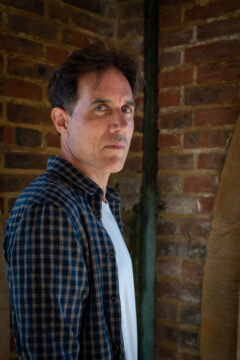
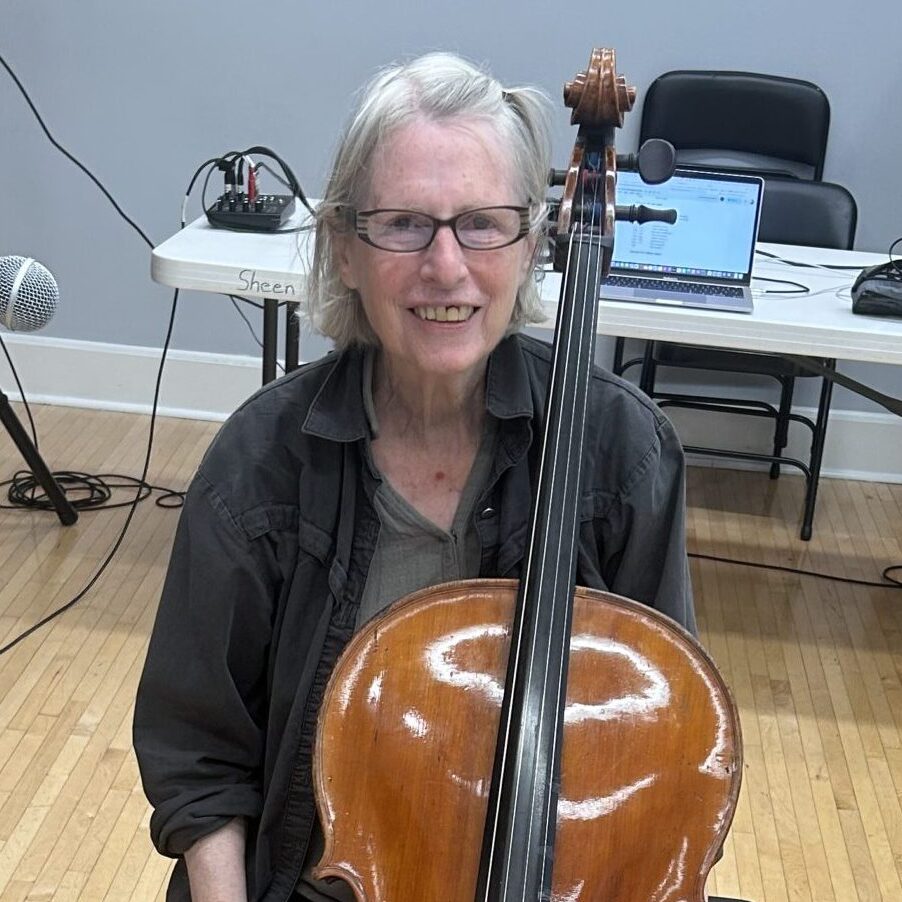
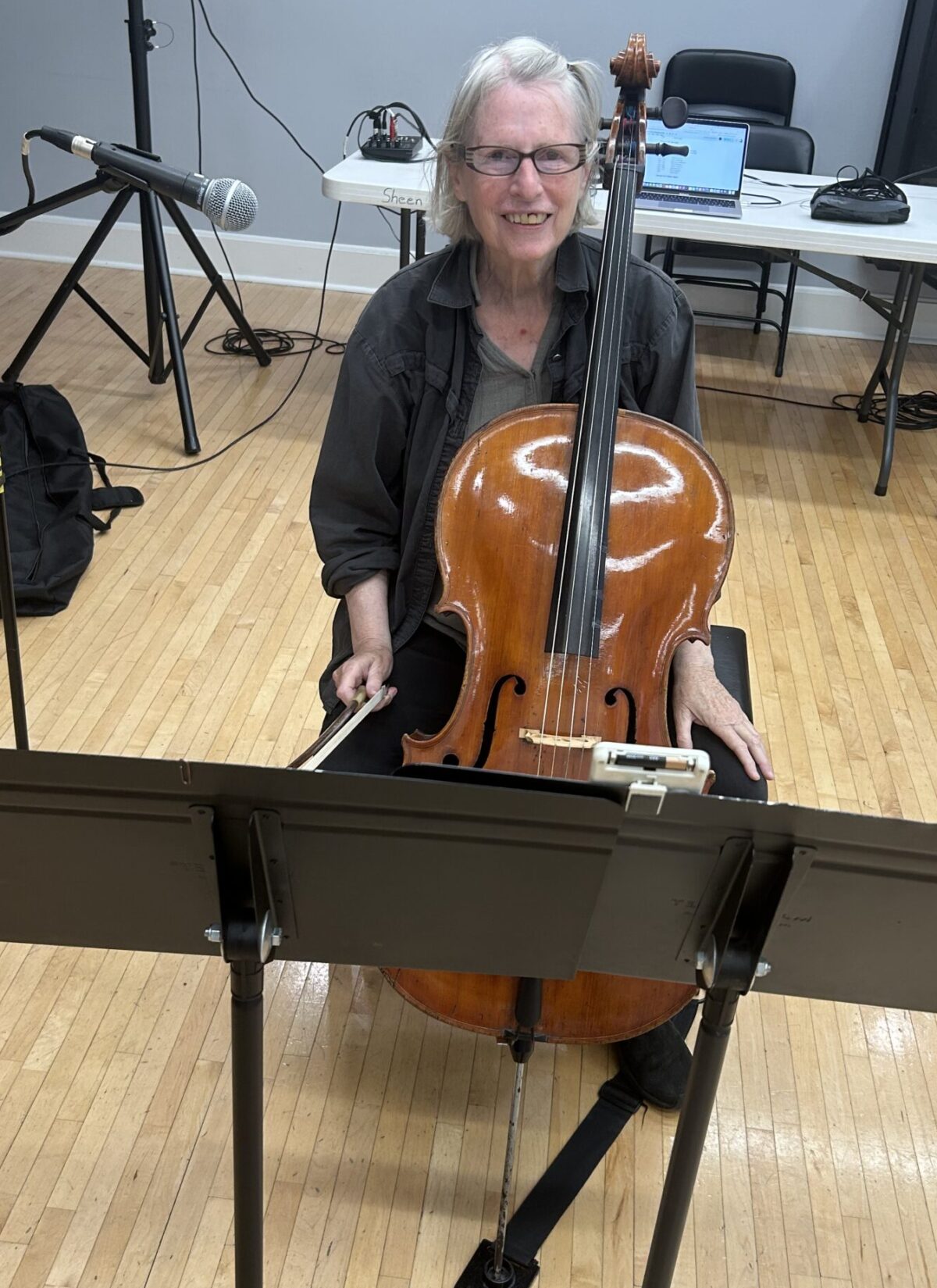
June 2026: the long-awaited live premiere of The Gramophone Played took place during the New York City Electroacoustic Music Festival (NYCEMF) on 22 June performed by its co-composer, the cellist Madeleine Shapiro. This was a new version of the work including an epilogue that draws on texts from the WWI Armistice and Treaty of Versailles documents.
The Gramophone Played has a very involved history intertwined with mine and Madeleine’s artistic relationship that goes back to 2012 when we first met at the INTIME conference at the University of Coventry. Even by 21st century standards of communication, our relationship is unusual in the extent to which it has been nurtured within the online world; before this year’s premiere Madeleine and I had only met in person on that single occasion in Coventry some 14 years ago!
The Gramophone Played itself began life around 2018/19 and was performed in its original, shorter, version in 2021 as part of the online iteration of NYCEMF; 2020-2021 were, of course, the Covid-19 pandemic years so the festival was unable to convene physically. I have written here about how the technologically mediated nature of The Gramophone Played and the context of the pandemic influenced the outcome of the piece; essentially the pandemic pulled us away from making a piece for live performance and towards creating a piece of acousmatic music (music to be heard through speakers/headphones). Madeleine and I, in effect, became ‘bedroom’ electronic composers leading to a microscopic focus on sound and an elaborate editing process for the (now recorded) cello part.
I also wrote, in the same article, about how the electronic fixed media part of The Gramophone Played came to function as a kind of aural score for Madeleine. This was evident in various revisits that she made to the piece after the 2021 premiere; the improvised musical language of Madeleine’s cello part remained the same but there were subtle changes to its pacing and shaping through the piece. A similar approach was evident in the epilogue that occupied us, on and off, from around 2023 to the first half of 2026. Despite its short length (roughly four minutes) this part of The Gramophone Played cost us considerable effort; we needed to find a change in sound world without moving the piece in a completely different direction and, as an improviser, Madeleine needed to respond to a quite different, denser, kind of electronic backing.
The fourteen year gap between our two face-to-face meetings is a not inconsiderable length of time and, as artists, our careers have traversed many phases, the inevitable ups and downs we all experience as well as changes in our ambitions, aesthetic values, and so on. I am very proud of the tenacity we have both shown to keep plugging away at the Gramophone Played; the piece is short in duration but its modest span belies the huge amount of collaboration (both musical and emotional) that has produced it. Hearing and seeing Madeleine finally perform the piece as we always intended, but with both of us in very different career and life positions to when we first discussed working together, was very moving. I am determined this won’t be the last time The Gramophone Played is heard live but it is preserved in perpetuity here in any case.
